
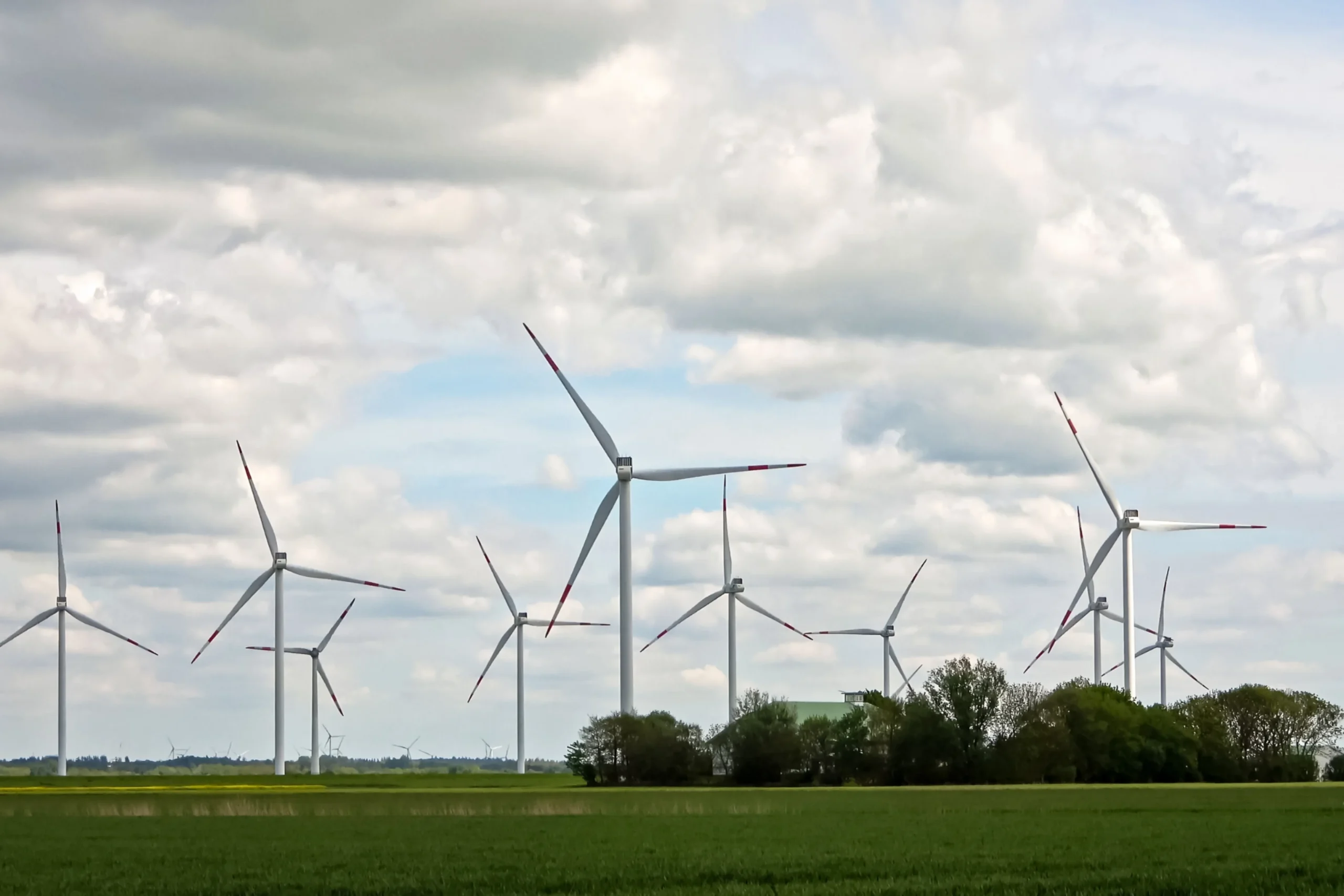
The Department of Energy (DOE) has launched the Fifth Round of the Green Energy Auction (GEA-5), its most ambitious and targeted effort yet to establish the Philippines as a regional leader in offshore wind energy. This round marks the first auction under the Green Energy Auction Program (GEAP) dedicated exclusively to fixed-bottom offshore wind (OSW) technology. With a target of 3,300 MW for delivery between 2028 and 2030, GEA-5 signals the government’s readiness to facilitate large-scale offshore renewables. GEA-5 is implemented pursuant to Department Circular No. DC2021-11-0036, which governs the GEAP framework, and forms part of the country’s broader commitments under the Philippine Energy Plan 2023–2050 and the updated National Renewable Energy Program. In parallel with the auction launch, the DOE has issued a permitting guidebook for offshore wind, setting out a consolidated process for over 80 permits across 25 regulatory agencies. Together, these developments represent a coordinated regulatory effort to address both market access and permitting certainty for the nascent OSW sector.
Auction Framework and Draft Terms
On 11 June 2025, the DOE released the draft Notice of Auction (NOA) and Terms of Reference (TOR) for GEA-5. These documents establish the legal and procedural foundation for auction participation. The NOA confirms that the auction is limited to fixed-bottom offshore wind technologies, citing their global maturity, cost-efficiency, and near-term scalability. Floating OSW, while not excluded in principle, is not yet covered by the current round due to its early stage of commercial deployment. The TOR outlines that eligible participants must hold valid Wind Energy Service Contracts (WESCs) and meet stringent technical, financial, and permitting readiness thresholds. Bidders are required to submit a pre-qualification portfolio including evidence of technical capability, development experience, and compliance with DOE and ERC registration requirements. The TOR imposes a bid bond requirement pegged to the offered capacity, payable in Philippine pesos or USD, to ensure seriousness of participation. The auction process will follow a sealed-bid format, with the lowest price offers—subject to the Green Energy Auction Reserve (GEAR) price ceilings to be issued by the Energy Regulatory Commission (ERC)—being awarded 20-year Power Supply Agreements under the Renewable Portfolio Standards (RPS) program. While the final bid evaluation criteria remain subject to stakeholder inputs, the draft TOR indicates that financial and permitting readiness will weigh heavily in the selection process, reflecting the DOE’s objective to award only bankable and implementation-ready projects
Regulatory Streamlining Through the OSW Permitting Guidebook
In parallel with the auction design, the DOE has published the country’s first Offshore Wind Permitting Guidebook. Developed in cooperation with the Southeast Asian Energy Transition Partnership, the guidebook consolidates complex requirements across government entities into a streamlined roadmap. Offshore wind projects historically required more than 80 permits from 25 government offices, contributing to significant project delays. The guidebook now organizes these into four main phases: pre-development, development and feasibility, construction and installation, and operations and decommissioning. Among the agencies involved are the Department of Energy (DOE), which oversees the issuance of Wind Energy Service Contracts (WESCs); the Department of Environment and Natural Resources (DENR), which grants Environmental Compliance Certificates (ECCs); the Philippine Ports Authority (PPA) and the Maritime Industry Authority (MARINA), which handle permits for marine construction; the National Grid Corporation of the Philippines (NGCP), responsible for grid connection studies and access; and the Philippine Coast Guard (PCG), which ensures maritime safety and issues navigation clearances. The DOE also proposes centralized digital tracking and inter-agency coordination—particularly through its Renewable Energy Management Bureau (REMB) and Wind Energy Management Division (WEMD)—to monitor regulatory compliance, resolve jurisdictional overlaps, and synchronize auction timelines.
Infrastructure Readiness and Marine Logistics
To complement the permitting reforms, the DOE and PPA have announced the repurposing of three key ports to support offshore wind deployment: the Port of Currimao in Ilocos Norte, the Port of Batangas in Batangas City, and the Port of Jose Panganiban in Camarines Norte. These ports are being prepared for turbine assembly, crew transfer, and long-term operations and maintenance (O&M) support. Grid infrastructure is also expected to be coordinated in advance with the NGCP to ensure project delivery by 2028–2030.
Conclusion
GEA-5 is a foundational step toward a scalable, bankable offshore wind market in the Philippines. The coordinated release of auction rules and a national permitting framework reflect the DOE’s whole-of-government approach. Developers and stakeholders are advised to participate in the public consultation process and monitor the finalization of the NOA, TOR, and GEAR pricing.
- DOE Media Release, “Fifth round of Green Energy Auction for offshore wind projects set to launch in 3Q of 2025,” December 12, 2024. Accessed through: Fifth round of Green Energy Auction for offshore wind projects set to launch in 3Q of 2025 | Department of Energy Philippines.
- Philippine Energy Plan 2023–2050; DOE Circular No. DC2021-11-0036.
- Offshore Wind (OSW) Permitting Guidebook (DOE and Southeast Asian Energy Transition Partnership), June 2025. Accessible through: OSW Guidebook.pdf.
- DOE Draft Notice of Auction (GEA-5 NOA), dated June 11, 2025. Accessed through: Draft GEA-5 NOA 10062025_0.pdf.
- DOE Press Release, “DOE Kicks Off Green Energy Auction for Fixed-Bottom Offshore Wind,” June 11, 2025. Accessed through: DOE Kicks Off Green Energy Auction for Fixed-Bottom Offshore Wind | Department of Energy Philippines.
- OSW Permitting Guidebook, pp. 5–7.
- Ibid., Chapter II – Phased Regulatory Map.
- Ibid., Chapter IV – Roles of National Government Agencies.